My Top 10 UX finds in Japan!
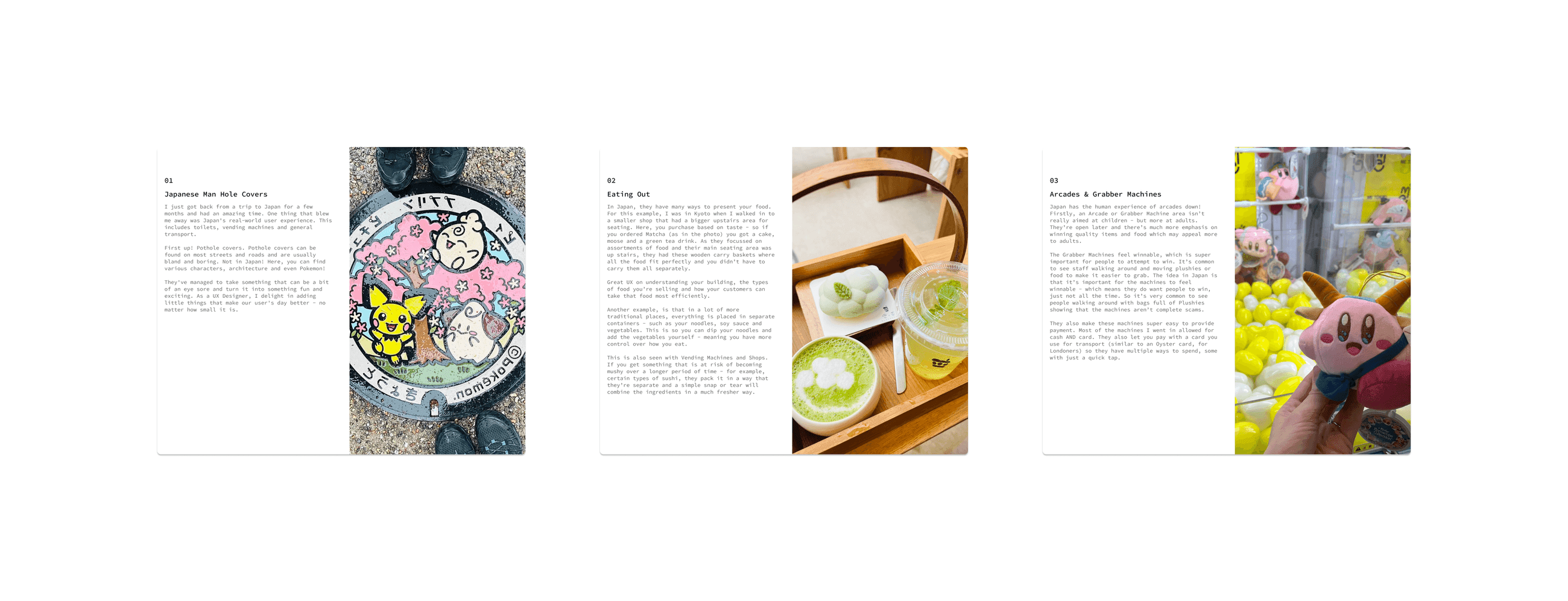
Japan is renowned for its attention to detail, efficiency, and user-centered design. Whether it’s the seamless integration of technology in daily life, the intuitive layout of public spaces, or the meticulous care taken in customer service, the country offers countless examples of excellent UX in action. From the simple yet brilliant design of vending machines that cater to diverse needs to the perfectly timed and clean train systems that make navigation effortless, Japan exemplifies how thoughtful design can enhance everyday experiences.
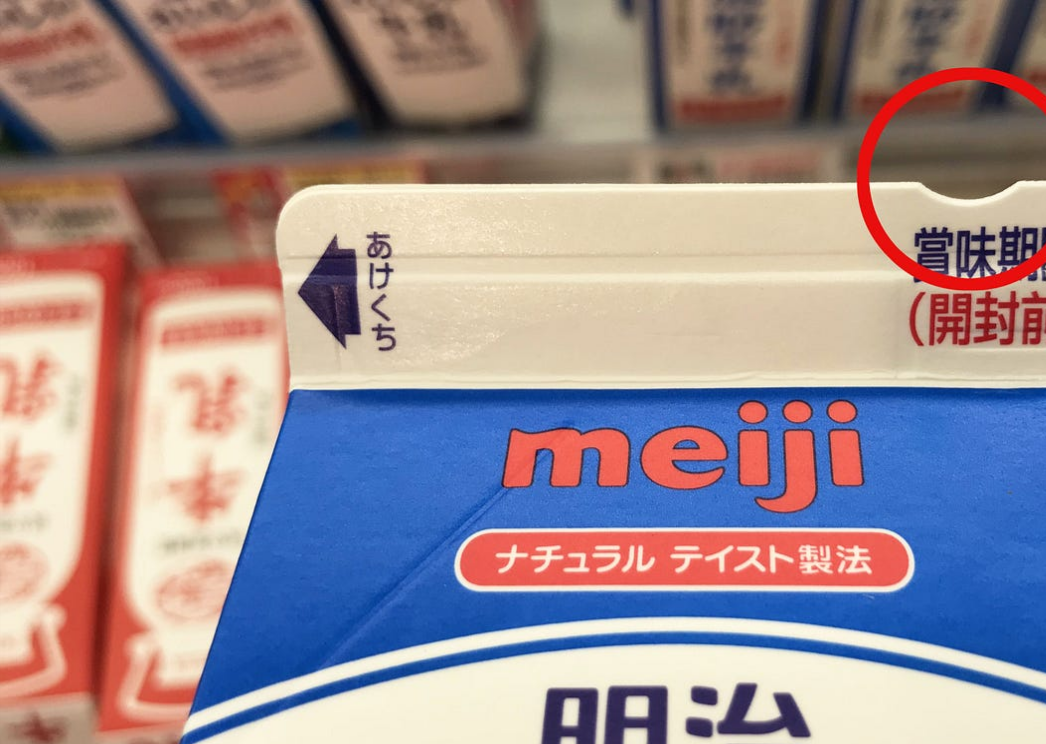
Keeping a diary allowed me to capture these moments of brilliance. I noted how even the smallest details, such as the clear and concise signage in public transport or the ergonomic packaging of products, were crafted with the user’s convenience in mind. These observations highlighted how UX in Japan is not just about aesthetics but about making life easier and more enjoyable for everyone.
Expanding Horizons: The Impact of Travel on UX Design
Traveling, especially to a country like Japan, can profoundly influence a designer’s approach to UX. When you are exposed to different ways of thinking and designing, it forces you to question your assumptions and consider new possibilities. In my case, experiencing the efficiency and thoughtfulness of Japanese design challenged me to think more critically about how design can be improved in my own country.
For example, the meticulous attention to detail in Japan made me reconsider the level of detail in my own work. It made me more aware of the importance of small, thoughtful touches that can significantly impact the user experience. Additionally, observing how Japanese designs often prioritize simplicity and functionality inspired me to streamline my own designs, focusing more on how they could serve the user better rather than just how they looked.
The Diary: A Tool for Reflection and Growth
Keeping a diary during my trip was more than just a way to remember my experiences; it became a tool for reflection and growth. By documenting the various UX designs I encountered, I was able to analyze and learn from them in a more structured way. This practice also helped me to internalize the lessons I learned and think about how I could apply them in my own work.
Writing down my observations forced me to articulate what made certain designs effective and how they could be adapted or improved in different contexts. This process of reflection deepened my understanding of UX and helped me to develop a more global perspective on design. It also reinforced the importance of being open to new ideas and continuously learning from different cultures and environments.
Conclusion: The Benefits of a UX Diary
Traveling offers UX designers a wealth of inspiration and learning opportunities. By keeping a diary of the great UX experiences I encountered in Japan, I was able to capture the thoughtful and efficient designs that make the country a hub of excellent user experience. This practice not only helped me to appreciate the nuances of Japanese design but also encouraged me to think outside the box and consider new approaches to UX in my own work.
In a field that is constantly evolving, staying open to new ideas and learning from different cultures is essential. A UX diary serves as a valuable tool for capturing these experiences, reflecting on them, and applying them to create better, more user-centered designs. My experience in Japan reinforced the idea that great UX is about more than just aesthetics; it’s about making life easier, more efficient, and more enjoyable for users, no matter where they are in the world.